Other Pets · Habitat
Natural Branch vs Dowel Perches for Birds: What Changes for the Setup?
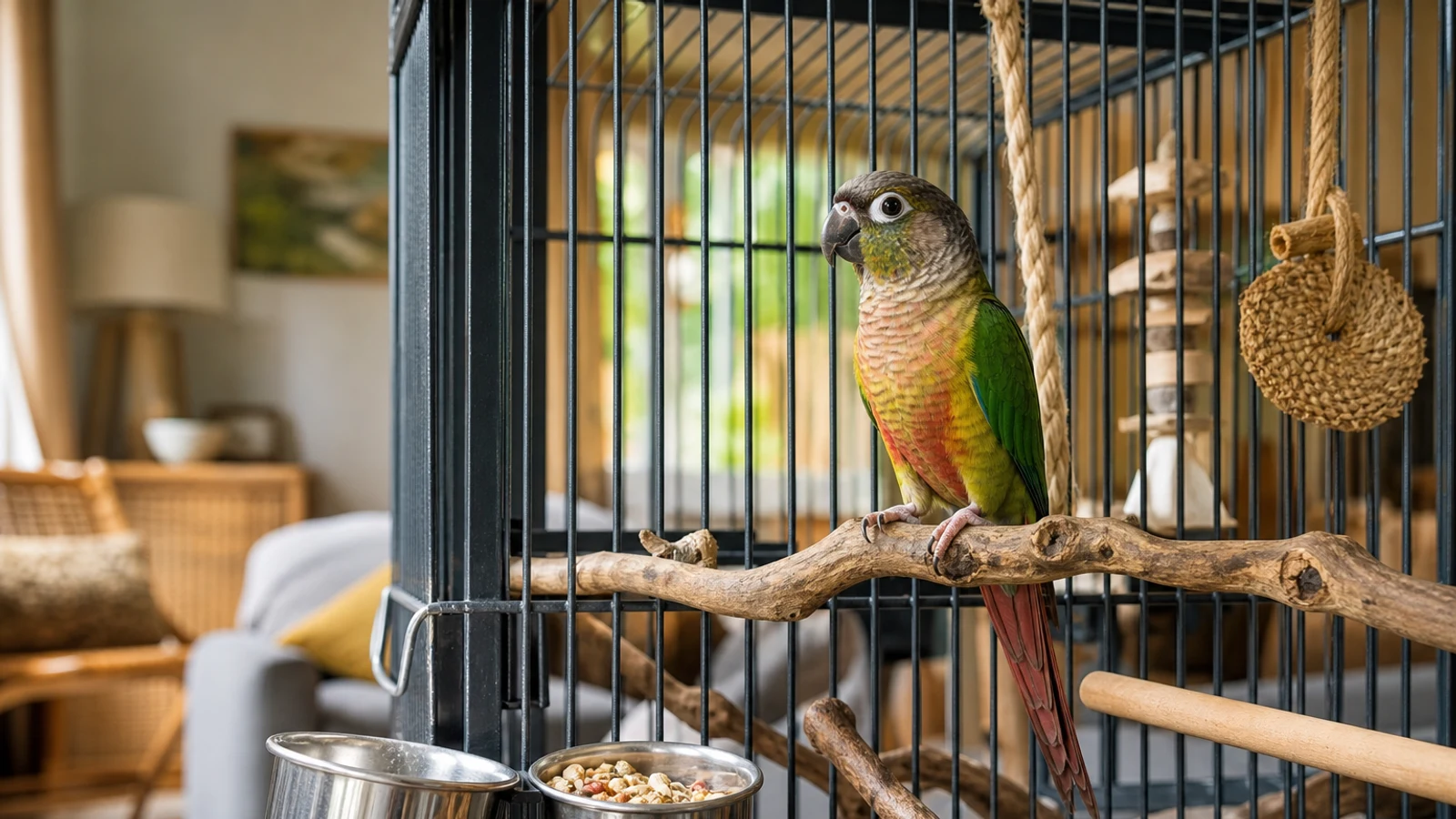
Natural branch perches usually offer better variation for grip, foot pressure, movement, and chewing. Dowel perches are simple and easy to clean, but a cage built mostly around one smooth diameter can create a less varied setup. The practical answer is usually a combination of correctly sized, safe perches rather than choosing only one material.
Quick answer
For most pet-bird cages, natural branch perches are the better primary choice because their uneven diameters and textures let birds shift pressure and use their feet in different ways. Dowel perches can still be useful as a secondary perch, training perch, or easy-to-clean location. Avoid making every perch the same smooth diameter, and replace any perch that becomes splintered, heavily soiled, or unsafe to grip.
Shop this guide
Current Amazon options
Six current listings related to this buying decision. Use the guide to compare fit and trade-offs, then verify the latest seller, price, size, and availability on Amazon.
As an Amazon Associate I earn from qualifying purchases. Product availability, seller, price, and listing details can change.
Key decision checks
The practical difference: varied grip versus uniform support
Natural branch perches change the setup by giving the bird several diameters, angles, and surface textures in one piece. That variation lets the toes and foot pads contact the perch differently as the bird moves, rests, climbs, and chews. For many parrots and other cage birds, this makes a branch more than a place to stand: it also becomes a usable part of the enclosure’s physical and behavioral enrichment.
A dowel perch is uniform from end to end. That makes it predictable, inexpensive-looking in the functional sense, and easy to position, but the same diameter can keep pressure concentrated on similar areas of the feet. A dowel is not automatically unusable; the concern is relying on several identical smooth dowels as the entire perching system. The setup, rather than the material name alone, determines much of the outcome.
- Choose the perch first for secure grasp and appropriate size, not for appearance.
- Use more than one diameter and, where appropriate, more than one texture.
- Leave enough clearance for the bird to turn without striking tail or wing feathers.
- Keep perches arranged so droppings do not continually soil food, water, or lower perches.
Why natural branches usually make the better main perches
A suitable branch can support more natural foot use because its diameter changes instead of remaining perfectly cylindrical. Veterinary guidance commonly recommends varied perch diameters so birds can distribute pressure across different areas of the feet and maintain a reliable grip. Natural wood also gives many birds an appropriate surface to chew, which can make the perch part of everyday enrichment rather than a static cage fitting.
Branch perches are especially useful for birds that spend substantial time climbing or chewing, including many parrots. They can also make a cage feel less mechanically uniform. However, “natural” does not mean automatically safe. A branch must be identified, free from treatment and contamination, structurally sound, and prepared according to current avian-veterinary guidance before it is placed where a bird can chew it.
- Prefer commercially prepared bird-safe branches when you cannot confidently identify or prepare outdoor wood.
- Reject wood with mold, rot, sticky sap, pesticide exposure, road pollution, animal droppings, or sharp splinters.
- Inspect bark, forks, fasteners, and mounting points regularly, especially for strong chewers.
- Replace a branch when chewing creates sharp fragments or when cleaning no longer keeps it hygienic.
Where dowel perches still make sense
Dowel perches are useful when you need a straight, stable, predictable surface. They can work as a temporary perch during cage rearrangement, a training perch for a bird learning to step up, or a convenient perch near an access door or cleaning area. A smooth wooden dowel may also be easier to scrub and inspect than a deeply textured branch, although cleaning convenience does not make a uniform dowel ideal as the only perch.
The best use for dowel is usually limited and deliberate. Match its diameter to the bird so the toes can wrap securely without being forced into a cramped position or stretched too far apart. If a dowel is the only perch available, improving the cage with additional safe diameters and textures is more important than simply replacing one dowel with a more expensive version of the same shape.
- Use a dowel as one component of a mixed setup rather than the sole resting surface.
- Avoid making all perches the same diameter, height, and orientation.
- Do not assume a dowel helps trim nails; abrasive or rough perch covers can injure foot undersides.
- Use a temporary dowel for training only when it is correctly sized and stable.
Foot comfort depends on size and variety
Perch diameter should be judged against the individual bird’s feet, not selected only by species label or cage size. The bird should be able to grip securely without the toes being forced into an uncomfortable spread. A perch that is too large can reduce grip, while one that is too small may keep the foot in a narrow, repetitive position. Because birds vary within a species, observe how your bird stands and moves rather than relying on a single universal measurement.
Variety does not mean every perch should be extreme. Include comfortable resting surfaces as well as branches that encourage climbing and movement. Keep the most-used sleeping perch especially stable, clean, and appropriately sized. If the bird consistently favors one perch, inspect that perch and the surrounding layout; a preferred perch may be convenient, comfortable, or simply located in the safest-feeling part of the cage.
- Watch for slipping, persistent weight-shifting, reluctance to perch, or repeated lifting of one foot.
- Look for redness, swelling, scabs, wounds, or changes on the underside of the feet.
- Offer several practical choices instead of forcing the bird to use a single specialized perch.
- Ask an avian veterinarian about foot changes rather than trying to correct a suspected injury through perch changes alone.
Compare options for your pet
Natural Branch vs Dowel Perches for Birds: What Changes for the Setup?
Compare current Amazon listings using the fit and safety checks in this guide. Confirm size, specifications, seller and availability before ordering.
See on Amazon →As an Amazon Associate I earn from qualifying purchases. Links open Amazon search results; individual listings have not been independently verified.
Safety and cleaning: the trade-off is real
Natural branches require more judgment and inspection than dowels. Outdoor wood can carry microorganisms, insects, mold, chemical residue, or plant compounds that are unsafe when chewed. If you collect a branch yourself, identify the tree and follow a preparation method recommended by an avian veterinarian or another qualified bird-care authority. When there is uncertainty about species, contamination, or preparation, a purpose-made commercial perch is the safer choice.
Dowel perches are often simpler to wipe, scrub, and replace, but they still collect droppings and food debris. Any perch should be cleaned when soiled, rinsed thoroughly after cleaning, and fully dried before returning to the cage. Avoid keeping a perch merely because it is washable: a cracked, splintered, chewed, or unstable perch should be removed even if its surface can still be disinfected.
- Check every perch for cracks, exposed hardware, sharp edges, loose mounts, and unstable attachment points.
- Remove splintered wood promptly; chewing can turn a previously safe perch into an injury hazard.
- Replace frayed rope or loose fibers if they are included elsewhere in the setup.
- Do not use sandpaper covers as a shortcut for nail care; they can abrade the feet and do not solve poor perch variety.
How to build a balanced perch layout
A practical cage usually benefits from a mix: one or more safe natural branches for varied grip and movement, a stable resting perch of suitable size, and possibly a straight dowel where predictable access is useful. The bird should still have enough open space to move and exercise. Perches should not crowd the cage, block doors, interfere with toys, or force the bird to sit in a stream of droppings from a higher perch.
Place the most-used resting perch where the bird can sleep comfortably without rubbing against the cage or tail feathers. Additional perches can create routes between food, water, toys, and activity areas, but avoid turning the enclosure into a ladder of identical horizontal bars. For larger parrots, inspect attachment hardware carefully because chewing and body weight can loosen poorly secured fittings.
- Start with the bird’s actual movement path, then add perches without reducing usable flight or climbing space.
- Keep food and water away from direct droppings whenever the cage layout allows.
- Use branches with forks or changing diameters only when the bird can navigate them without getting toes trapped.
- Reassess the layout after observing where the bird sleeps, eats, climbs, and spends inactive periods.
Which option fits your bird and household?
Choose mostly natural branch perches when your bird chews, climbs, spends long periods in the cage, or needs more varied foot use. They are also a strong fit when you can obtain verified bird-safe wood and are willing to inspect and replace it. For parrots, branch perches can provide both physical variation and a legitimate outlet for normal chewing behavior.
Choose a dowel as a supporting option when easy cleaning, predictable positioning, training, or temporary access matters most. It may suit a household that needs a straightforward perch near a door or food station, provided the bird also receives suitable variety elsewhere. For a bird with foot disease, lameness, arthritis, deformity, or a recent injury, the right perch plan should be individualized with an avian veterinarian rather than selected from a general comparison.
- Best default for enrichment and varied foot use: safe natural branches in several appropriate sizes.
- Best for predictable access or training: a correctly sized, stable dowel used as one part of the setup.
- Best for uncertain outdoor wood: a commercially prepared perch from a reputable bird-care supplier.
- Best for medical concerns: an avian-veterinary assessment before changing the enclosure substantially.
Common questions
FAQ
Can a bird use only natural branch perches?
It can, if the branches are safe, correctly sized, stable, cleanable, and arranged to leave enough room for movement. A mixed setup may still be more practical because a straight perch can provide predictable access for training or cage maintenance. Inspect natural wood frequently for splinters, contamination, loose mounts, and excessive wear.
Are dowel perches bad for birds?
A dowel is not automatically bad, but a cage filled with identical smooth dowels provides limited variation in diameter and texture. That can create a less useful foot-care and enrichment setup than one containing several suitable perch types. Use dowels selectively and avoid treating one uniform size as the complete solution.
What branch wood is safe for pet birds?
Common veterinary and avian-welfare references list several potentially suitable woods, including options such as apple, ash, beech, birch, maple, willow, poplar, and manzanita. Safety depends on correct identification, lack of pesticide or pollution exposure, absence of mold and rot, and proper preparation. If any part of that chain is uncertain, use a commercially prepared bird perch or consult an avian professional.
Do natural branches trim a bird’s nails?
They may provide more varied contact and wear than a single smooth dowel, but they should not be treated as a guaranteed nail-trimming device. Do not rely on rough or abrasive surfaces to shorten nails, because those surfaces can injure the bottoms of the feet. A veterinarian should assess persistent overgrowth or abnormal nails.
How often should bird perches be replaced?
There is no universal replacement interval. Replace a perch when it becomes splintered, cracked, heavily chewed, unstable, persistently soiled, or difficult to clean effectively. Chewing birds may wear through natural wood faster than birds that rarely chew. Inspect high-use perches during routine cage cleaning rather than waiting for a fixed calendar date.
When should a veterinarian examine a bird’s feet?
Arrange an avian-veterinary examination for swelling, redness, sores, scabs, bleeding, lameness, persistent foot lifting, reluctance to perch, or a sudden change in grip. Perch selection can reduce preventable pressure and injury risks, but it cannot diagnose or treat foot disease. Do not delay care while testing multiple perch materials at home.
Sources & further reading
Where the factual guidance comes from
Ready to choose?
Natural Branch vs Dowel Perches for Birds: What Changes for the Setup?
Compare current Amazon listings using the fit and safety checks in this guide. Confirm size, specifications, seller and availability before ordering.
See on Amazon →As an Amazon Associate I earn from qualifying purchases. Links open Amazon search results; individual listings have not been independently verified.
Keep researching