Other Pets · Cleanup
Corner vs Rectangular Rabbit Litter Pan: Which Fits the Enclosure Better?
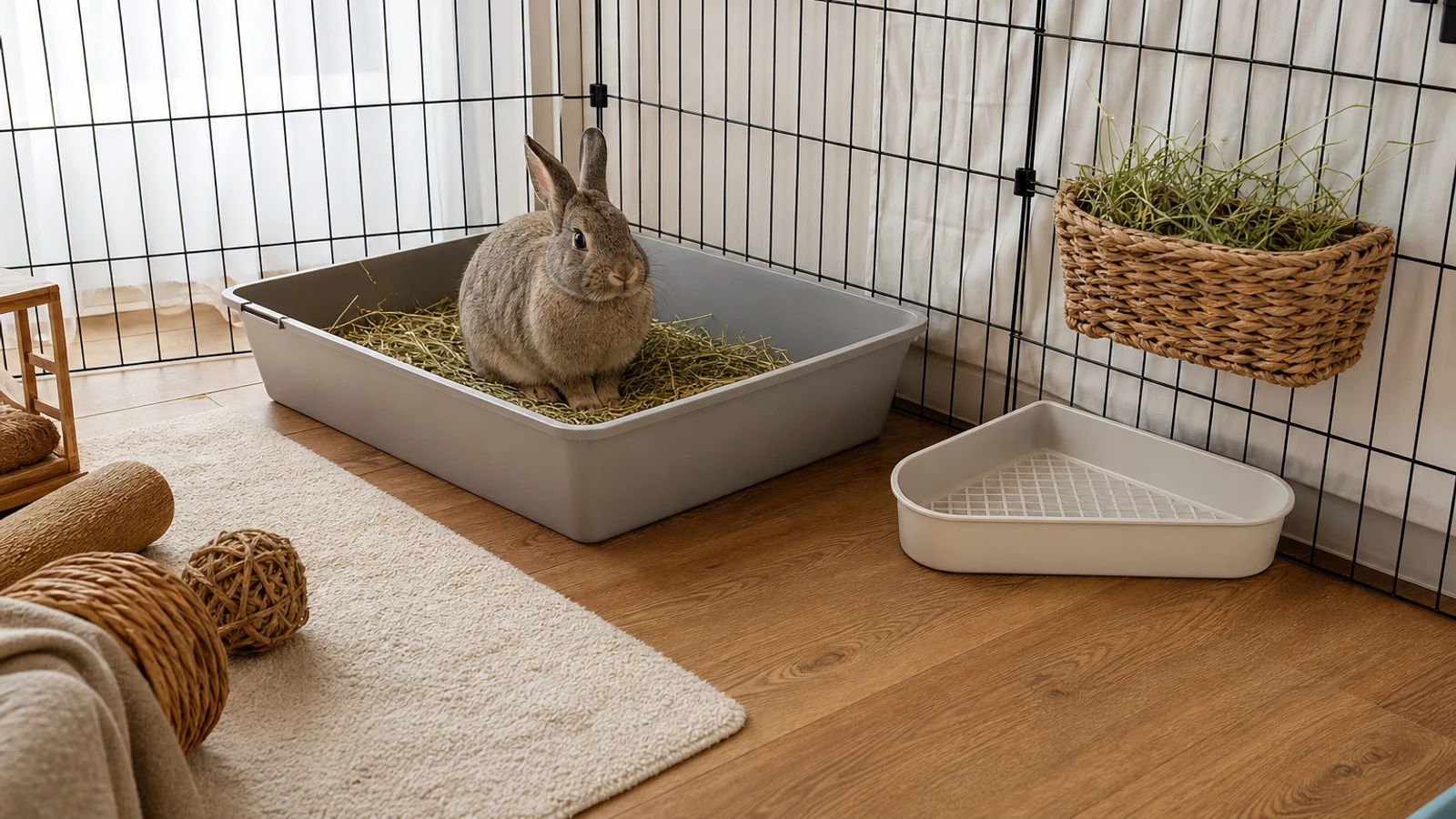
A corner pan can preserve floor space, but a large rectangular pan is usually easier for a rabbit to use comfortably. Choose by usable interior space and access first, then by shape.
Quick answer
For most rabbits, a large open rectangular litter pan fits better than a small triangular corner pan because it provides more room to sit, turn, eat hay, and keep waste contained. A corner pan makes sense only when it offers comparable usable space, has a low entry, and truly fits the rabbit’s regular toileting area without crowding the enclosure. Put either style where the rabbit already chooses to eliminate, and do not use a pan so small that the rabbit must perch or back over the edge.
Shop this guide
Current Amazon options
Six current listings related to this buying decision. Use the guide to compare fit and trade-offs, then verify the latest seller, price, size, and availability on Amazon.
As an Amazon Associate I earn from qualifying purchases. Product availability, seller, price, and listing details can change.
Key decision checks
The practical difference: corner placement versus corner shape
Rabbits commonly choose a preferred latrine site, often at the edge or in a corner of their enclosure. That does not mean the litter pan itself needs to be triangular. A rectangular pan can sit tightly against two walls and still use the corner efficiently, while giving the rabbit more floor area inside the pan.
The key distinction is usable interior space. Corner pans are designed to save floor area, but their angled back often reduces the room available for a rabbit to sit, turn, stretch, and share space with hay. Rectangular pans usually give more usable length and width, even when both options occupy a similar corner footprint.
- Choose the shape that fits the rabbit comfortably, not simply the shape that leaves the most visible floor space.
- Treat the pan as part of the enclosure layout: the rabbit needs room to enter, turn, exit, rest, and access hay without blocking the main path.
- If the enclosure cannot fit a suitably large pan, the enclosure may need to be reconfigured or enlarged rather than paired with a smaller toilet.
Why rectangular pans usually work better
A large rectangular pan is the safer default for many medium and large rabbits, bonded pairs, or rabbits that spend substantial time eating hay in the pan. The broader base gives more flexibility for positioning hay at one end and leaving a clean toileting area at the other. It also reduces the chance that the rabbit will sit awkwardly against the sides.
Rectangular pans are not automatically suitable. A shallow pan may allow urine to pass over the edge, while an oversized or high-sided model can make entry difficult. Look for a stable open-top pan with enough interior room and an entry height the rabbit can comfortably clear.
- Best fit: medium or large rabbits, bonded rabbits, hay-focused litter habits, frequent digging, or urine that reaches the rear wall.
- Main advantage: more usable floor area for sitting, turning, eating, and containing waste.
- Main drawback: it may occupy more of a narrow enclosure’s central floor area if the layout is poorly planned.
- Check the pan’s inside dimensions, not only its outside measurements or product label.
When a corner pan can be the better fit
A corner pan can be useful in a compact pen, a temporary recovery setup, or an enclosure with a narrow passage where a rectangular pan would obstruct movement. It may also suit a small rabbit if the interior is genuinely large enough for comfortable use. The rabbit’s actual toileting location matters more than a theoretical layout, so a corner model can be practical when it matches that location and preserves access around it.
The limitation is that many triangular pans marketed for rabbits are undersized. If the rabbit cannot sit fully inside, turn without touching the sides, or keep the tail and hindquarters over the pan, the space-saving design is working against the intended job. A low entry can help, but it does not compensate for inadequate floor area.
- Best fit: a small rabbit with a suitably roomy model, a narrow enclosure, or a temporary setup where every inch of floor space matters.
- Main advantage: efficient placement against two walls and less obstruction in a tight footprint.
- Main drawback: angled walls can reduce usable space and may encourage the rabbit to perch or urinate over an edge.
- Avoid choosing a corner pan solely because the enclosure has a corner available.
Measure the rabbit and the enclosure before buying
Measure the space available at the rabbit’s preferred toileting spot, including the clearance needed for the rabbit to approach and leave. Then compare that space with the pan’s interior floor dimensions and entry height. A pan that technically fits between two walls may still be unusable if the door, pen grid, hay feeder, or nearby furniture prevents a straight, comfortable approach.
For a bonded pair or a rabbit that uses the pan as a resting and feeding area, size for the larger space requirement rather than the smallest possible footprint. If the rabbit is growing, recovering from surgery, or developing mobility limitations, leave additional margin instead of buying a close-fitting pan.
- Measure interior length and width at the base, where the rabbit actually stands.
- Check whether the pan will fit through the enclosure door for removal and cleaning.
- Confirm that the entry is low enough for the rabbit but that the rear or side walls contain urine and kicked litter.
- Allow room for hay without forcing the rabbit’s body against a wall.
- For two rabbits, consider whether one pan is large enough or whether separate pans will reduce crowding.
Compare options for your pet
Corner vs Rectangular Rabbit Litter Pan: Which Fits the Enclosure Better?
Compare current Amazon listings using the fit and safety checks in this guide. Confirm size, specifications, seller and availability before ordering.
See on Amazon →As an Amazon Associate I earn from qualifying purchases. Links open Amazon search results; individual listings have not been independently verified.
Control urine, hay, and kicked litter without sacrificing access
Rectangular and corner pans can both control mess if their wall height and entry design match the rabbit’s habits. Rabbits may lift the tail to urinate, back into a rear corner, or kick litter while exiting. A higher back or a removable frame can help contain waste, but the entry should remain easy to step or hop over. Watch for urine on the enclosure floor rather than solving the problem by making the entire pan excessively tall.
Hay placement often improves litter use because many rabbits graze and eliminate at the same time. Place hay in or directly beside the pan without blocking the entrance. A larger rectangular pan often handles this combination more easily than a narrow corner pan, especially when the rabbit likes to sit in the box for extended periods.
- For urine over the edge, try a higher-backed or deeper pan while preserving a low front entry.
- For kicked litter, consider a stable pan with a suitable rim or frame, but avoid designs that trap toes or nails.
- For hay mess, use a pan with enough width to separate the hay area from the main toileting area.
- Do not use a wire or grated floor as a shortcut for cleanliness; solid, comfortable footing is generally preferable.
Safety and cleaning details that matter more than shape
Use a solid, stable pan made from a material that can be cleaned regularly and that the rabbit is unlikely to chew apart. Avoid plastic liners that could be ingested, and avoid litter products that are clumping, clay-based, heavily scented, or otherwise unsuitable for rabbits. Choose rabbit-appropriate litter according to guidance from a veterinarian or established rabbit-welfare organization, especially if the rabbit chews the substrate.
A pan should be easy to lift out, empty, rinse, and inspect. Frequent cleaning helps preserve litter habits and makes it easier to notice changes in urine, stool, appetite, or behavior. Product selection is not a substitute for veterinary advice: a sudden change in litter-box use, straining, blood, diarrhea, reduced appetite, or difficulty entering the pan warrants prompt contact with a rabbit-experienced veterinarian.
- Prefer an open-top, solid-bottom pan with comfortable footing and no exposed grid that can catch toes or nails.
- Use unscented rabbit-safe litter and follow the product’s directions for disposal and cleaning.
- Inspect corners, seams, and rims for chewing damage before each refill.
- Use the rabbit’s normal behavior to judge fit: relaxed sitting and easy entry matter more than a tidy product silhouette.
The bottom line for enclosure fit
Choose a large rectangular pan when comfort, hay access, waste containment, or multi-rabbit use is the priority. It is usually the more forgiving option because it offers usable interior space while still fitting neatly into an enclosure corner. A low-front, higher-back design can provide a useful balance for rabbits that need easier entry but tend to urinate toward the rear.
Choose a corner pan only when its interior dimensions suit the rabbit and its footprint solves a real layout problem. If it is visibly cramped, forces the rabbit to perch, or causes repeated misses, switch to a larger rectangular pan or reconsider the enclosure arrangement. The best pan is the one the rabbit can enter, use, and leave comfortably while the household can clean it consistently.
- Most households: start with a large open rectangular pan placed in the rabbit’s chosen corner.
- Small enclosure: first ask whether the enclosure can accommodate the rabbit and a properly sized pan, not whether a tiny corner model can fit.
- Small rabbit: a corner pan may work if its usable interior is genuinely roomy and the entry is easy.
- Messy or high-urinating rabbit: prioritize a solid pan with a low entry and higher rear or side walls.
Common questions
FAQ
Can I put a rectangular litter pan in a corner?
Yes. A rectangular pan can sit against two enclosure walls and often provides more usable room than a triangular pan with a similar corner footprint. Leave enough clearance for the rabbit to approach, enter, turn, and exit without catching the sides or nearby pen panels.
Are triangular rabbit litter pans too small?
Many are too small for medium and large rabbits, but shape alone does not decide suitability. Measure the usable interior and observe the rabbit’s posture. If the rabbit cannot sit fully inside, turn comfortably, or keep the hindquarters over the pan, choose a larger model.
How large should a rabbit litter pan be?
There is no single universal dimension because rabbit size, mobility, hay habits, and household setup vary. The rabbit should be able to sit fully inside, turn, access hay, and avoid touching the sides constantly. A rabbit-welfare organization or rabbit-experienced veterinarian can help assess an unusual size, bonded pair, or mobility concern.
Should hay go inside the litter pan?
Many rabbits use the litter pan more reliably when hay is placed in or directly above it because they often eat and eliminate at the same time. Keep the entrance clear and provide enough room that hay does not force the rabbit into an awkward position.
What if my rabbit urinates over the litter-pan edge?
Check whether the pan is too small, too shallow, or positioned incorrectly. A larger pan with a higher rear wall and lower entry may help. If the change is sudden or comes with straining, blood, reduced appetite, or other illness signs, contact a rabbit-experienced veterinarian rather than treating it as only a product problem.
Sources & further reading
Where the factual guidance comes from
Updated rabbit litter-training guidance covering preferred corner placement, adequate box size, hay access, and the need for a larger enclosure when a suitable box cannot fit.
Ready to choose?
Corner vs Rectangular Rabbit Litter Pan: Which Fits the Enclosure Better?
Compare current Amazon listings using the fit and safety checks in this guide. Confirm size, specifications, seller and availability before ordering.
See on Amazon →As an Amazon Associate I earn from qualifying purchases. Links open Amazon search results; individual listings have not been independently verified.
Keep researching