Other Pets · Feeding
Fabric Hay Bag vs Metal Hay Rack for Rabbits: Which Is Easier to Manage?
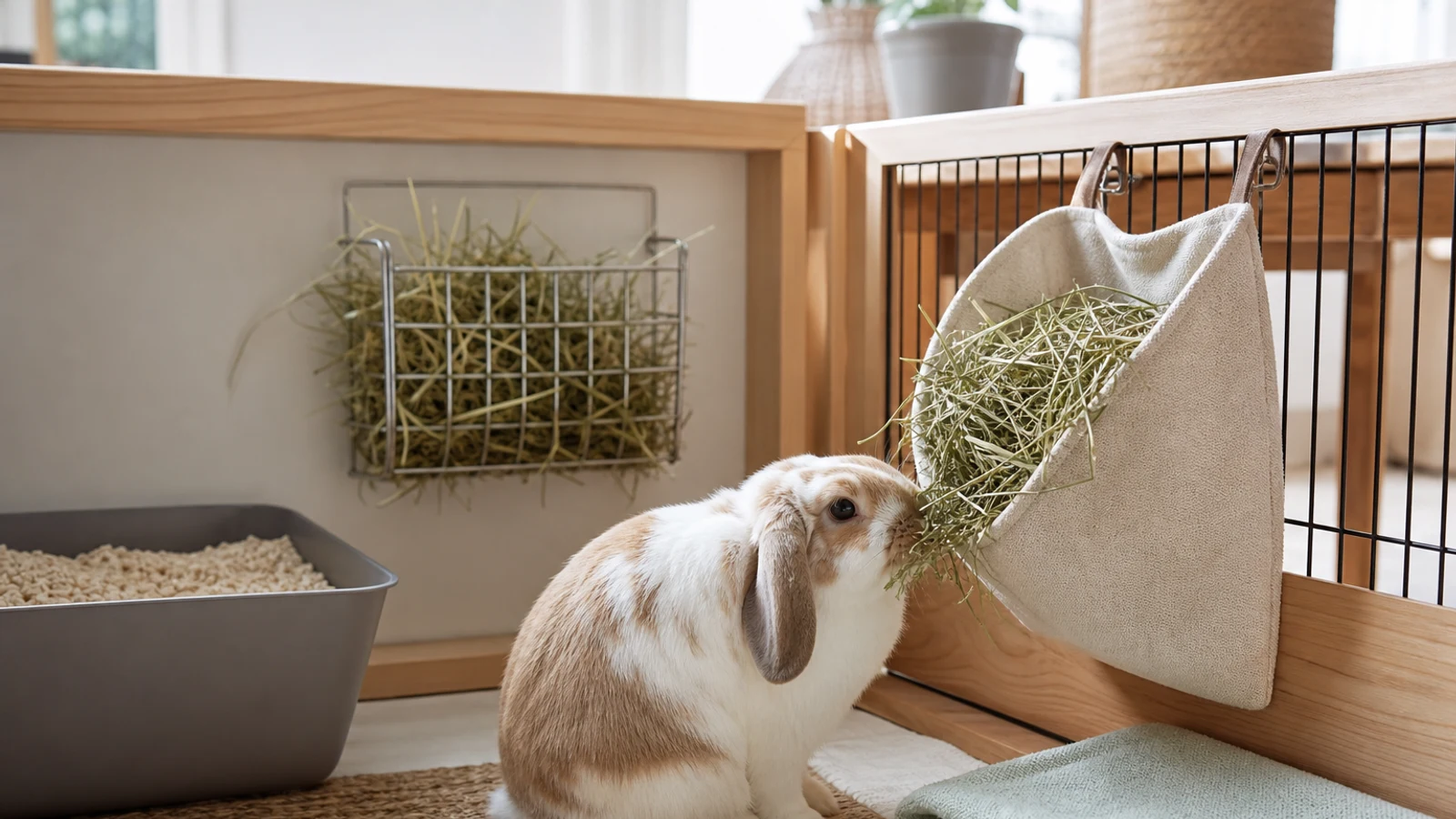
A fabric hay bag is often easier to remove and wash, while a metal hay rack is usually easier to inspect and less vulnerable to chewing. The better choice depends on your rabbit’s habits, enclosure, and cleaning routine.
Quick answer
Choose a fabric hay bag when you want a lightweight, removable feeder that can be washed and helps contain loose hay. Choose a metal hay rack when durability, visibility, and quick wipe-downs matter more, especially for rabbits that chew fabric. Neither option should limit hay access, force your rabbit to stretch, or remain in use if your rabbit chews the material, catches a paw, or cannot reach the hay comfortably.
Shop this guide
Current Amazon options
Six current listings related to this buying decision. Use the guide to compare fit and trade-offs, then verify the latest seller, price, size, and availability on Amazon.
As an Amazon Associate I earn from qualifying purchases. Product availability, seller, price, and listing details can change.
Key decision checks
The practical difference comes down to management
For most households, a fabric hay bag is easier to remove, carry to the hay supply, and wash as a separate item. It can also keep hay more contained in a small pen and may be quieter when a rabbit pulls at it. The trade-off is that fabric can absorb moisture, retain odors, fray, or become unsafe if your rabbit chews through the body, seams, straps, or window edges.
A metal hay rack is usually easier to inspect at a glance and wipe clean. It is less likely to be damaged by ordinary nibbling, but it can rattle, develop sharp edges if damaged, or become a climbing and entanglement hazard if it is poorly designed or mounted. Metal is not automatically safer; construction, spacing, attachment, and your rabbit’s behavior matter more than the material alone.
- Pick fabric for portability, washing, and a quieter setup.
- Pick metal for visibility, rigidity, and resistance to fabric chewing.
- Reject either style if it swings, collapses, has sharp edges, or lets the rabbit enter and become stuck.
Start with unlimited, reachable hay
The feeder’s job is to make good-quality hay available throughout the day and night, not to ration it. University extension and animal-welfare guidance describe grass hay as a major part of the rabbit diet and recommend continuous access. A feeder that looks tidy but leaves the rabbit without hay between refills is a management failure, regardless of whether it is fabric or metal.
Position the feeder where the rabbit can eat in a relaxed, natural posture. A rack or bag placed too high may encourage stretching or awkward reaching; one placed too low may become easy to sit in, soil, or climb. Many households place the feeder beside or above the litter area, but leave enough room for the rabbit to enter, turn, and exit freely.
- Check that hay is visible and reachable without stretching onto the hind legs.
- Refill before the feeder is empty; do not rely on a small capacity as a substitute for monitoring.
- Provide enough feeder access for bonded rabbits so one rabbit cannot monopolize the supply.
- Offer hay in another safe location if your rabbit avoids the feeder or eats poorly from it.
Fabric hay bags: easier washing, more condition checks
Fabric bags suit households that want a feeder they can unhook, empty, and launder. Product designs commonly use hanging hooks, straps, or clips and may include one or more feeding openings. A washable bag can be convenient when hay dust and small pieces collect around the opening, but it must be fully dry before refilling. Damp material can transfer moisture to the hay and make the feeder harder to keep fresh.
The main management issue is rabbit-specific chewing. Some rabbits ignore the fabric; others pull at seams, hooks, or edges. Inspect the bag every day at first, then continue regular checks. Stop using it if threads loosen, holes enlarge, fasteners detach, or the rabbit is ingesting pieces. A manufacturer’s claim that a textile is bite-resistant is not a guarantee for an individual rabbit.
- Look for wide, smooth openings that do not trap the rabbit’s head or whiskers.
- Prefer secure attachment points that do not leave long loops or loose straps.
- Wash according to the product instructions and air-dry completely.
- Replace the bag when fabric, stitching, hooks, or window edging deteriorates.
- Avoid improvised bags or materials whose dyes, coatings, fillings, or hardware are unknown.
Metal hay racks: durable, visible, and unforgiving of poor design
Metal racks are often the simpler choice for a rabbit that destroys fabric. Their rigid shape makes it easy to see how much hay remains, and many can be mounted to an enclosure or wall. A powder-coated or otherwise finished rack may be easier to wipe than a textile, but the finish should remain intact. Any bent wire, exposed point, broken weld, or damaged coating deserves removal from the enclosure.
The important caution is placement. A rack with openings that are too small, too deep, or badly spaced can create access and trapping problems. A rabbit should not be able to climb inside, wedge its head, catch a paw, or pull the rack loose. Mount it securely, check the attachment routinely, and watch the first several feeding sessions rather than assuming a commercial product is suitable for every rabbit.
- Run a hand over accessible edges to check for burrs, points, or rough damage.
- Choose a rack that stays fixed when the rabbit pulls hay from it.
- Keep it away from shelves or platforms that turn the rack into a launching point.
- Clean away damp hay and droppings promptly; replace the rack if corrosion or damage appears.
- Do not use a rack that permits the rabbit to climb into the hay compartment.
Compare options for your pet
Fabric Hay Bag vs Metal Hay Rack for Rabbits: Which Is Easier to Manage?
Compare current Amazon listings using the fit and safety checks in this guide. Confirm size, specifications, seller and availability before ordering.
See on Amazon →As an Amazon Associate I earn from qualifying purchases. Links open Amazon search results; individual listings have not been independently verified.
Which option is easier to keep clean?
Fabric usually wins when cleaning means removing the entire feeder and laundering it. That convenience is valuable in a litter-box-centered setup where hay, urine, and droppings can mix. However, cleaning only helps if the bag dries completely and remains structurally sound. A spare feeder can make rotation easier, but do not assume every textile is machine-washable; follow the item’s care instructions.
Metal usually wins for quick daily maintenance. Loose hay can be lifted out, and hard surfaces can be wiped or washed without waiting for fabric to dry. The downside is that a rack may allow more hay to fall onto the floor, litter, or bedding, depending on the opening size and the rabbit’s pulling style. A clean-looking rack is not necessarily the lower-waste option in every enclosure.
- For fabric, inspect seams and dry the feeder fully before reuse.
- For metal, remove stuck hay from corners, welds, clips, and mounting points.
- Discard hay that is wet, urine-soiled, moldy, or contaminated with droppings.
- Track actual waste for a week instead of relying on product claims about mess reduction.
Match the feeder to your enclosure and rabbit
A fabric bag is often practical in a wire exercise pen with suitable horizontal bars and enough clearance behind the feeder. It may be less useful on solid-panel housing unless the attachment method is designed for that surface. A metal rack can work well on wire panels or a stable wall mount, but the enclosure must be strong enough to support it and positioned so the rabbit cannot use it as a step.
Your rabbit’s behavior should decide the final choice. A gentle rabbit that leaves fabric alone may benefit from a washable bag. A persistent fabric-chewer may need a rigid alternative or a different hay presentation. An older, stiff, overweight, or mobility-limited rabbit may need hay lower and more openly presented; ask a rabbit-savvy veterinarian or qualified rabbit professional if eating posture or appetite changes.
- Measure bar spacing, mounting height, and clearance before buying.
- Observe whether your rabbit pulls, climbs, digs, chews, or guards the feeder.
- For multiple rabbits, provide enough access points to reduce competition.
- Place hay where you can inspect intake and refill without disturbing the whole enclosure.
A safer buying checklist
The best feeder is the one that keeps hay available, stays secure, remains clean, and matches the rabbit in front of you. Treat convenience as secondary to access and safety. A feeder should support normal feeding behavior, not turn hay into a puzzle that delays eating or makes the rabbit work at an awkward angle.
Introduce any new feeder while monitoring the rabbit’s appetite, droppings, posture, and behavior. If the rabbit suddenly eats less hay, produces fewer droppings, drools, repeatedly paws at the mouth, or seems painful, remove the product and contact a veterinarian promptly. A feeder comparison cannot diagnose dental, gastrointestinal, or other health problems.
- Confirm the feeder can hold enough hay for your refill schedule.
- Check every opening, seam, hook, weld, edge, and attachment point.
- Make sure the rabbit cannot climb inside or become caught.
- Choose materials that you can clean using the manufacturer’s instructions.
- Keep a loose-hay backup option available during introduction or cleaning.
- Reassess the setup after changes in age, size, mobility, bonded-rabbit relationships, or chewing behavior.
Common questions
FAQ
Is a fabric hay bag safer than a metal rack for rabbits?
Not universally. A fabric bag may be unsuitable for a rabbit that chews cloth, while a metal rack may be unsuitable if it has sharp edges, unsafe openings, or weak mounting. Choose the design that your rabbit cannot damage or enter, and inspect it regularly.
Can a rabbit eat hay from a bag all day?
Yes, provided the bag allows comfortable, continuous access and does not create a trapping or chewing hazard. Hay should not be rationed simply because it is stored in a feeder. Refill before the rabbit runs out.
How high should a rabbit hay feeder be?
Place it so the rabbit can reach the hay without stretching, standing awkwardly, or repeatedly climbing. The correct height depends on the rabbit and feeder, so observe the rabbit eating rather than relying on one universal measurement.
Should hay be offered somewhere besides the feeder?
It can be helpful, especially during introduction, cleaning, or if a rabbit does not readily use the feeder. A low, clean hay area or litter-box hay setup may make access easier, but remove wet or soiled hay promptly.
What should I do if my rabbit chews the fabric hay bag?
Remove it if the rabbit is tearing or swallowing material, then switch to a safer presentation while you assess alternatives. Do not rely on labels such as bite-resistant. If chewing is sudden, intense, or accompanied by appetite changes, consult a rabbit-savvy veterinarian.
Can I use a horse hay net or homemade mesh bag for a rabbit?
Avoid assuming that equipment made for another species is appropriate. Hole size, loops, fasteners, fabric, and mounting can create trapping or ingestion risks. Use a product designed for rabbits or have a species-qualified professional review the setup.
Sources & further reading
Where the factual guidance comes from
Ready to choose?
Fabric Hay Bag vs Metal Hay Rack for Rabbits: Which Is Easier to Manage?
Compare current Amazon listings using the fit and safety checks in this guide. Confirm size, specifications, seller and availability before ordering.
See on Amazon →As an Amazon Associate I earn from qualifying purchases. Links open Amazon search results; individual listings have not been independently verified.
Keep researching