Other Pets · Beds & Comfort
Wood vs Fabric Hideout for Rabbits: Which Fits Daily Use Better?
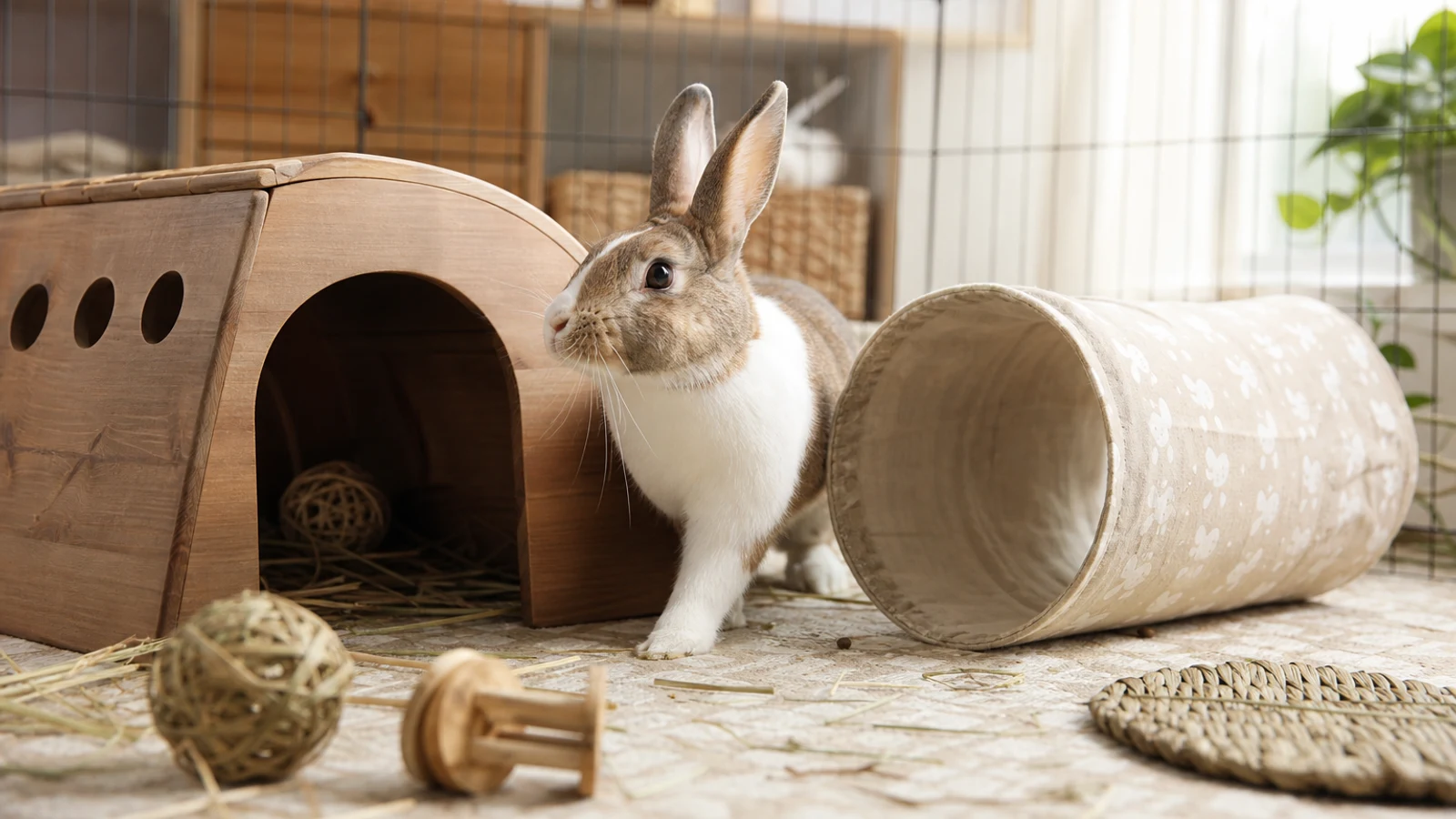
Wooden hideouts usually work better as a durable daily shelter, while fabric tunnels can add flexible enrichment when your rabbit does not chew or ingest the material. The best choice depends on chewing habits, cleaning needs, ventilation, rabbit size, and whether the hideout has more than one exit.
Quick answer
For most rabbits, a sturdy wooden hideout is the better primary daily retreat because it is durable, stable, and less likely to trap loose threads or become unusable after a urine accident. A fabric tunnel can be a useful secondary option for rabbits that leave fabric alone and for households that value portability or machine-washable covers. Whichever material you choose, provide enough hiding places for every rabbit, ideally with an extra, and select a design with safe access and no sharp or damaged parts.
Shop this guide
Current Amazon options
Six current listings related to this buying decision. Use the guide to compare fit and trade-offs, then verify the latest seller, price, size, and availability on Amazon.
As an Amazon Associate I earn from qualifying purchases. Product availability, seller, price, and listing details can change.
Key decision checks
Wood and fabric solve different daily-use problems
Choose wood when the hideout must function as a stable, long-lasting shelter inside an active rabbit enclosure. A well-made wooden box or tunnel can resist pushing, digging, and ordinary wear better than soft fabric. It also gives a rabbit a firm roof, sides, and floor-level retreat without collapsing when the rabbit leans against it or jumps over it.
Choose fabric when you want a lightweight tunnel that can be moved, folded, or washed more easily than a fixed wooden structure. Fabric is not automatically the more comfortable or safer option, however. Rabbits investigate their environment with their teeth, and a fabric hideout that is chewed, frayed, or swallowed should be removed rather than treated as a permanent shelter.
- Best default primary shelter: sturdy rabbit-appropriate wood or another rigid material.
- Best flexible enrichment: a fabric tunnel used only when the rabbit leaves it intact.
- Best setup for many homes: one durable main hide plus a separate tunnel or cardboard option, if the rabbit uses both safely.
Pick wood for durability, stability, and active chewers
Wood is usually the stronger match for rabbits that push, scratch, climb, or chew their furnishings. A rigid hideout is less likely to fold over the rabbit, slide across the enclosure, or develop a narrow opening after repeated use. It can also double as a platform or part of a connected tunnel layout when its construction is designed for that purpose.
Wood still needs inspection. Look for smooth edges, secure joints, adequate ventilation, and a size that allows the rabbit to enter, turn, rest, and leave without rubbing against sharp corners. Avoid products with splinters, exposed fasteners, peeling coatings, strong chemical odors, or construction materials whose safety is unclear. Replace or repair damaged pieces rather than waiting for an injury risk to become obvious.
- Inspect for splintering, exposed nails or screws, loose panels, and rough entry edges.
- Prefer a clearly disclosed, rabbit-appropriate material and finish; do not assume every painted, stained, glued, or treated wood product is suitable.
- Remove soaked or heavily soiled wood if it cannot be cleaned and dried thoroughly.
- Check that the structure cannot tip when the rabbit jumps on or pushes against it.
Pick fabric for portability, but monitor chewing closely
Fabric tunnels are useful when you need a hideout that can be repositioned, stored, or laundered. They may fit temporary exercise areas, travel setups, or enrichment layouts where a rigid house is inconvenient. A tunnel with open ends can also give a rabbit a route through the enclosure without creating the trapped feeling associated with a single-entry cave.
The main limitation is material ingestion. Loose threads, frayed seams, exposed internal supports, and shredded lining can become hazards if a rabbit pulls and swallows them. Some rabbits ignore fabric for years; others begin chewing after a short period. Supervise the first uses, inspect the tunnel frequently, and remove it at the first sign that the rabbit is ingesting fibers or damaging the structure.
- Choose sturdy, tightly finished seams with no dangling ties, loops, tassels, or detachable parts.
- Prefer an open tunnel or hide with two exits so the rabbit can retreat without being cornered.
- Wash and dry according to the maker’s instructions, and do not return the item while damp or strongly scented.
- Do not use a fabric hideout as the only shelter for a rabbit that persistently chews cloth.
For daily housing, design matters more than the material label
A good hideout lets a rabbit withdraw, rest, and leave freely. The material alone does not determine whether it is appropriate. A tiny wooden house with one cramped entrance may be less useful than a spacious fabric tunnel, while a fraying fabric tent may be less suitable than a plain cardboard box. Evaluate the finished design in the enclosure, not just the product category.
Provide enough hiding places for all rabbits to use one at the same time, with an additional option when possible. This matters especially in bonded pairs or groups, where one rabbit should not be able to block the only retreat. Position hides so entrances are not blocked by bowls, litter boxes, walls, or other furniture, and leave enough open space for normal hopping and turning.
- Measure the adult rabbit, not only the current juvenile size; allow comfortable turning and resting.
- Use more than one hide for bonded rabbits, with enough space for both shared and separate retreat.
- Check that entrances do not create pinch points and that the rabbit can exit in either direction when practical.
- Place the hide away from persistent dampness, direct drafts, and areas where urine or spilled water collects.
Compare options for your pet
Wood vs Fabric Hideout for Rabbits: Which Fits Daily Use Better?
Compare current Amazon listings using the fit and safety checks in this guide. Confirm size, specifications, seller and availability before ordering.
See on Amazon →As an Amazon Associate I earn from qualifying purchases. Links open Amazon search results; individual listings have not been independently verified.
Cleaning and hygiene often decide the better choice
Fabric has the advantage when the cover or tunnel can be removed and washed thoroughly. That advantage disappears if the material stays damp, retains urine odor, cannot be dried fully, or has padding that traps soiling. A washable fabric hide should be checked after every cleaning for weakened seams, exposed threads, bent supports, and shrinkage that changes the opening.
Wood is easier to keep structurally stable but can absorb urine, feces, and spilled water. A wooden hide that cannot be cleaned and dried properly may become a recurring hygiene problem. Keep litter and hay areas separate from the sleeping retreat when possible, use absorbent bedding appropriately, and inspect the hide regularly rather than relying on appearance alone.
- Remove any hideout that is persistently wet, heavily soiled, moldy, or impossible to clean adequately.
- Use a separate washable mat or bedding layer only if the rabbit does not chew and ingest it.
- Keep cleaning products and fragrances mild and fully rinsed; never return a rabbit to a hideout with wet residue or strong fumes.
- Check hidden undersides, seams, corners, and the area beneath the hide, not just the visible entrance.
Match the hideout to the rabbit and the household
A calm rabbit that does not chew fabric may enjoy a soft tunnel as a daily enrichment item. A persistent chewer, a rabbit that has already shredded bedding, or a rabbit housed in a busy area usually needs a more robust primary retreat. Older, arthritic, injured, or recovering rabbits may also need easier entry and stable footing; product choice should not substitute for veterinary guidance when mobility or pain changes.
For outdoor or temperature-variable housing, a hideout should be considered part of the broader shelter rather than a complete climate-control solution. Rabbits need protection from heat, cold, wind, rain, and dampness, and sick or elderly rabbits may have reduced ability to regulate body temperature. Ask a rabbit-experienced veterinarian or qualified welfare professional for advice when the rabbit has unusual temperature sensitivity, respiratory signs, reduced appetite, pain, or sudden changes in hiding behavior.
- Choose wood first for a rabbit that chews soft goods or needs a firm, stable retreat.
- Choose fabric as a monitored secondary hide when portability and washing are priorities.
- Choose the easiest entrance and safest footing for rabbits with limited mobility.
- Use veterinary advice for illness, injury, persistent hiding, appetite changes, or temperature concerns.
A practical buying checklist
The best daily hideout is the one your rabbit can use without being trapped, injured, overheated, or exposed to material it will ingest. Compare the complete construction: openings, dimensions, stability, surface condition, cleanability, and the likelihood that your rabbit will chew it. A lower-cost or simpler box may be a better welfare choice than an elaborate plush house with one opening and difficult-to-clean padding.
If you are uncertain, start with a sturdy primary hide and observe how your rabbit interacts with it for several days. Add a fabric tunnel only if the rabbit leaves it intact. Product guidance can help with selection, but a rabbit-experienced veterinarian should assess any concerning behavior, suspected ingestion, wounds, breathing changes, or persistent avoidance of the enclosure.
- Confirm the hideout is large enough for the rabbit’s adult body and easy to enter and exit.
- Look for two or more openings when the design allows, especially in narrow tunnels or enclosed houses.
- Reject damaged, fraying, splintered, unstable, strongly scented, or difficult-to-clean products.
- Observe chewing, toileting, resting, and avoidance behavior after installation.
- Keep a second safe retreat available during cleaning or while a hideout is being repaired.
Common questions
FAQ
Is a wooden hideout safer than a fabric hideout for rabbits?
Not in every situation, but wood is usually the safer primary choice for rabbits that chew soft materials. A wooden hideout still needs smooth surfaces, safe construction, stable placement, and regular inspection. Fabric can be appropriate for rabbits that leave it intact, but it should be removed if the rabbit chews or swallows fibers.
Can rabbits sleep in a fabric tunnel every day?
They can if the tunnel is appropriately sized, well ventilated, structurally sound, and the rabbit does not chew or soil it excessively. Inspect it often for fraying, loose threads, damaged supports, dampness, and trapped waste. A fabric tunnel should not be the only retreat if its condition is uncertain.
Should a rabbit hideout have two entrances?
Two entrances are generally useful because they allow the rabbit to leave without feeling cornered and can improve access in multi-rabbit homes. They are not a substitute for adequate size, ventilation, stability, or additional hiding places. Make sure both openings are wide enough for the rabbit’s body and do not create sharp or narrow pinch points.
How many hiding places does a rabbit need?
Provide at least one hiding place per rabbit, with an additional one when possible. This lets bonded rabbits hide at the same time and gives them a choice of resting locations. The hiding places should be distributed so one rabbit cannot block all access to shelter.
When should I ask a veterinarian about hiding behavior?
Contact a rabbit-experienced veterinarian if hiding suddenly increases or is accompanied by reduced appetite, fewer droppings, lethargy, breathing changes, limping, pain, diarrhea, or trouble moving. Product selection is not a treatment for illness, and rabbits can mask signs of discomfort until a problem is advanced.
Sources & further reading
Where the factual guidance comes from
Veterinary housing guidance identifying concealed cardboard or wooden boxes as suitable rabbit hiding areas.
Rabbit-rescue guidance on multi-exit wooden houses, fabric tunnel supervision, and removing fabric if a rabbit tries to ingest it.
RSPCA housing guidance on safe hiding places, inspection for damage, bedding, and providing enough hides for rabbits.
Ready to choose?
Wood vs Fabric Hideout for Rabbits: Which Fits Daily Use Better?
Compare current Amazon listings using the fit and safety checks in this guide. Confirm size, specifications, seller and availability before ordering.
See on Amazon →As an Amazon Associate I earn from qualifying purchases. Links open Amazon search results; individual listings have not been independently verified.
Keep researching